



Loopwheels are unique in their design and function, which means we often get a lot of questions about them!
That’s why we’ve put together this in-depth comparison review of Loopwheels and spoked wheelchair wheels. This article aims to break down the key differences, explore real-world performance, and help you make an informed choice based on comfort, durability and everyday use.
Whether you’re considering an upgrade, curious about suspension wheels, or want to understand your options better, this review is written with your questions in mind.
Spoked Wheels: The Industry Standard
Traditional spoked wheels have been around for over a century, developing from the tensioned wire designs pioneered in the late 1800s for penny-farthing bicycles. The principle of a hub held within a rim by tensioned spokes creates a wheel that is strong whilst lightweight.
That lightweight design is a key reason spoked wheels became the wheelchair industry standard. Lighter wheels are easier to lift into a car or transport, while also offering responsive performance for active users. Combined with wide compatibility and cost-effectiveness, spoked wheels have remained a practical choice for decades.
Introducing Loopwheels: The Wheel Reinvented
So if spoked wheels are lightweight, efficient and widely trusted, why rethink them at all?
The answer lies in comfort and protecting the body from damage. Traditional, rigid wheels are designed to roll efficiently but not to absorb vibration or cushion impacts, so much of the shock from uneven ground is transmitted through the chair. Loopwheels were designed to address that limitation.
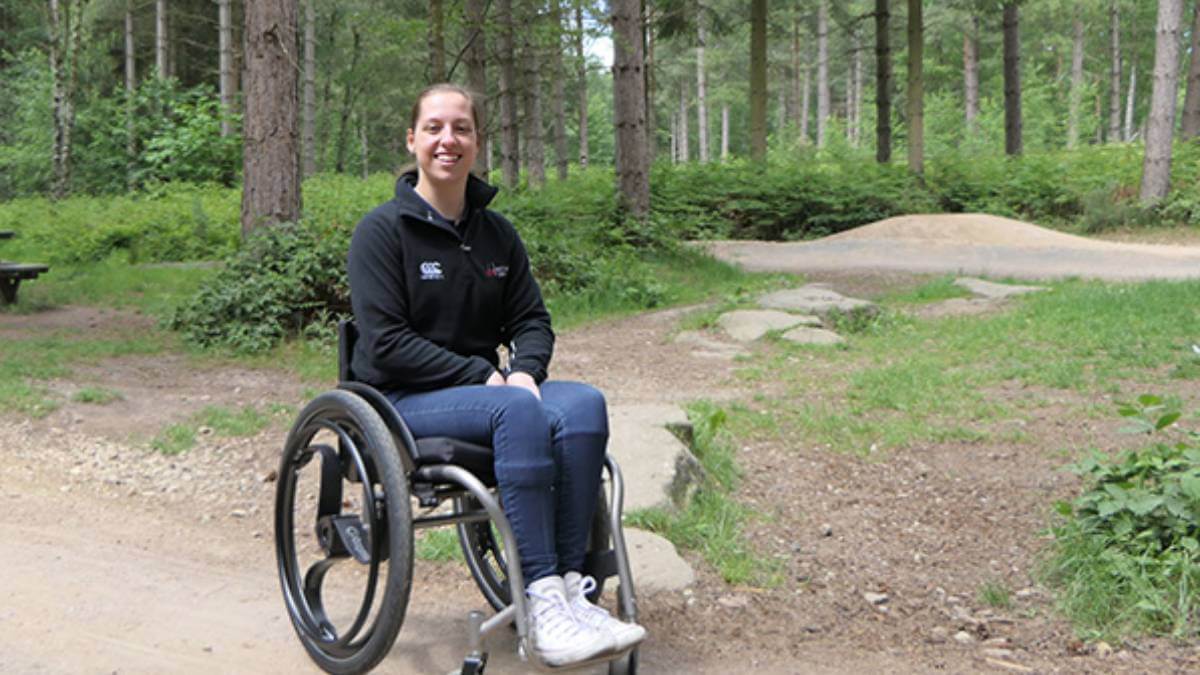
Within a Loopwheel, the traditional spokes are replaced with three carbon-composite springs. The three loops in each wheel work together as a self-correcting system. This spring system between the hub and the rim of the wheel provides suspension that constantly adjusts to uneven terrain, cushioning the rider from bumps and potholes.
Why Wheel Design Matters…
In everyday life, smooth surfaces are the exception rather than the norm. Kerbs, uneven pavements, cracked tarmac, cobbles, and door thresholds are part of the experience of moving through most towns and cities. Many of these surfaces are unavoidable, prompting the question of whether wheel design should better respond to everyday environments.
Vibration & Shock Reduction
One of the main differences between Loopwheels and spoked wheels is the amount of vibration and shock they transfer. Research from the University of Pittsburgh compared Loopwheels to spoked wheels, reporting that Loopwheels reduced vibration exposure by 35% and shock by 50% when propelling manually. Participants also noted fewer bumps and a smoother ride in everyday environments.
Comfort & Health Outcomes
Whole-body vibration has been linked to neck/back pain and fatigue in wheelchair users, and reducing it is considered important for long-term comfort and health. Independent studies indicate that Loopwheels can bring vibration exposure closer to levels defined as safe by international standards, and that users experience less pain and fatigue over extended use. The effects are likely to be exacerbated through use of a power add-on, so suspension is key for this group.
Movement
Because Loopwheels don’t just work as wheels, they’re also a suspension system; you’ll notice they’re different from rigid spoked wheels. Loopwheels have more movement, both laterally and up and down. This isn’t a manufacturing flaw, and it won’t change during use – it is part of their unique design and brings many benefits. If you move from rigid wheels to Loopwheels, you may notice this difference, and it could take some getting used to. For most customers, this is just another difference between the designs.
Weight & Propulsion
The three-carbon composite springs within a Loopwheel typically make them heavier than traditional spoked wheels. This extra weight increases propulsion costs and can also be a factor when considering Loopwheels if you regularly transfer your wheels and chair manually into a vehicle and/or propel manually without a power-assist add-on. The benefits of reduced pain and fatigue are balanced against these factors.
Maintenance
Traditional spoked wheelchair wheels are relatively simple to maintain. Individual spokes can be replaced or re-tensioned if they loosen over time, and most wheelchair service providers (and often bike shops) are familiar with spoked wheels. If spoked wheels are not correctly tensioned, they can buckle or break.
Loopwheels remove the need for spoke tensioning altogether, as there are no individual spokes to adjust. The composite suspension springs are designed to be durable and low-maintenance. Inevitably, a repair or servicing may be needed from time to time. If you ever have any questions about your Loopwheels, our dedicated, experienced team will be on hand to help.
Cost vs Long-Term Value
There is a price difference between standard spoked wheels and Loopwheels: the products aren’t direct equivalents. Loopwheels combine the function of a wheel with an integrated suspension system, which changes both the ride characteristics and the engineering involved.
We offer a payment plan to spread the cost of a pair of Loopwheels over up to 12 months. We also have an outlet store where ex-demo and trial wheels are available at reduced prices, depending on availability.
Real-World Feedback
“Initially I tried Loopwheels about 5 years ago on the try before you buy scheme (which you very kindly extended for me), and while I liked them I was unsure if I liked them enough for the cost involved. However, on my first day back on my Spinergy wheels after returning the trial Loopwheels, I realised quite how much of a difference they were making, as I painfully felt every small bump I hit, including the paint on the playground at school! I immediately bought myself some Classics and have loved them ever since, and now wouldn’t go back.”
“These wheels make such a difference to your comfort, your ability to be able to go anywhere, and especially after you’ve taken a long ride… your kidneys, your body that’s gone through all this very harsh terrain and given your body a real jolting, and you feel the fatigue. But now with these wheels, it’s like riding over a cloud. It’s fantastic. They really have made such an enormous difference in my life. I couldn’t be more grateful for the wheels.”
“It’s strange just how easy it is to move with Loopwheels! I don’t have to plan and look where I’m going. They’re just so amazing – I love them!”
Ultimately, the choice is yours…
Traditional spoked wheels remain a strong choice for users prioritising the lightest possible setup, particularly if you regularly lift your chair into a car or do not experience fatigue or back pain.
Ultimately, the decision about whether spoked or suspension wheels are best for you comes down to personal preference, how your body feels, your lifestyle, your health, and your daily environment. There isn’t a single “best” wheel – only the one that best supports the way you live and move.
If you’re interested in learning more about Loopwheels, why not check out our guide to choosing the right model today.